7 Common Skincare Mistakes That Could Be Affecting Your Skin
Taking care of your skin sounds simple, but with thousands of skincare products, beauty trends, and social media tips available today, it can be difficult to know what your skin actually needs. Many people follow complicated routines because they believe that using more products will automatically lead to better-looking skin.
However, skincare is not about using the maximum number of products. It is about understanding your skin, choosing suitable products, and following a consistent routine.
Sometimes, the problem is not the absence of skincare—it is the mistakes we make while using skincare products.
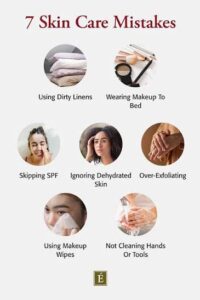
From skipping sunscreen and over-exfoliating to changing products too frequently, small habits can affect how your skin feels and looks.
In this blog, we will discuss 7 common skincare mistakes, how to avoid them, and how to build a simpler routine that works better for your individual needs.
Why Is a Proper Skincare Routine Important?
Your skin is exposed to many external factors every day, including sunlight, pollution, dust, weather changes, and environmental stressors. A basic skincare routine can help keep the skin clean, moisturized, and protected.
A simple routine usually includes three important steps:
- Cleansing
- Moisturizing
- Sun protection
Depending on your skin type and concerns, you may also add serums or treatment products.
The key is to choose products according to your skin’s needs rather than following every new skincare trend.
Now, let’s look at some of the most common mistakes people make.
1. Using Too Many Skincare Products
One of the most common skincare mistakes is believing that more products mean better results.
You may see skincare routines online that include cleansers, toners, multiple serums, exfoliators, face masks, oils, creams, and several other products. While some people may use more extensive routines, beginners do not necessarily need all of these steps.
Using too many products at the same time can make your routine unnecessarily complicated. It can also make it difficult to determine which product is responsible if your skin becomes irritated.
What Should You Do Instead?
Start with a simple routine.
Morning:
Cleanser → Moisturizer → Sunscreen
Night:
Cleanser → Moisturizer
Once your skin is comfortable with this basic routine, you can introduce additional products based on a specific need.
Adding products one at a time makes it easier to understand how your skin responds.
2. Skipping Sunscreen
Sunscreen is one of the most important parts of a daytime skincare routine, yet many people skip it.
Sun exposure can contribute to premature skin aging and other forms of skin damage. UV radiation can affect the skin even when the weather does not feel particularly hot.
Using a broad-spectrum sunscreen can help protect exposed skin from ultraviolet radiation.
How to Make Sunscreen a Daily Habit
Apply sunscreen as the final step of your morning skincare routine.
Remember to apply it to exposed areas such as:
- Face
- Neck
- Ears
- Other exposed skin
If you spend a long time outdoors, reapplication may be necessary depending on your activity and the product’s directions.
Common Sunscreen Mistakes
Some people apply sunscreen only when going to the beach or during summer. Others use very little product or forget areas such as the neck and ears.
Instead of treating sunscreen as an occasional product, make it part of your regular daytime routine.
3. Over-Exfoliating Your Skin
Exfoliation can help remove dead skin cells and improve the feel and appearance of the skin. However, more exfoliation does not necessarily mean better skin.
Using exfoliating products too frequently or combining multiple exfoliating products can irritate the skin and affect the skin barrier.
Some people may notice:
- Dryness
- Redness
- Burning or stinging
- Increased sensitivity
- Tightness
How Can You Avoid Over-Exfoliation?
First, understand the instructions of the exfoliating product you are using.
Avoid immediately combining multiple strong exfoliating products simply because they are popular.
If you are new to exfoliation, start cautiously and observe how your skin responds.
A healthy skincare routine should focus on balance, not aggressive treatment.
4. Choosing Products Without Considering Your Skin Type
Another common mistake is buying skincare products simply because they worked for someone else.
Everyone’s skin is different. A product that feels great on dry skin may feel too heavy for oily skin. Similarly, a product designed for oil control may feel uncomfortable on very dry skin.
Your skin type can generally be described as:
- Oily
- Dry
- Combination
- Normal
- Sensitive
How Does Skin Type Affect Product Choice?
For oily skin, lightweight products may feel more comfortable.
For dry skin, moisturizing products may be more suitable.
For combination skin, different areas may have different needs.
For sensitive skin, a simple routine with gentle products may be preferable.
For normal skin, maintaining a balanced routine is generally the priority.
Understanding your skin type can help you make more informed choices when shopping for skincare products.
5. Changing Products Too Frequently
Skincare trends change constantly. A new serum becomes popular, then a new cleanser, then another viral ingredient.
This can lead people to change their skincare routine every few days.
Constantly switching products makes it difficult to understand what is actually working for your skin.
It can also make it harder to identify the cause of irritation if multiple new products are introduced at once.
A Better Approach
Introduce new skincare products gradually.
If you want to add a serum to your routine, start with one new product instead of changing your cleanser, moisturizer, serum, and sunscreen simultaneously.
This allows you to observe how your skin responds.
Remember, skincare is usually about consistency rather than constantly chasing the newest trend.
6. Not Reading Product Labels and Instructions
A product’s packaging contains important information about how it should be used.
However, many people purchase skincare products based only on advertisements, social media recommendations, or attractive packaging.
Before using a product, check:
- What the product is designed for
- How often it should be used
- How much should be applied
- Whether there are usage warnings
- Which ingredients are included
- Storage instructions
- Expiry or period-after-opening information
Reading the label can help you use skincare products correctly.
Pay Attention to Active Ingredients
Some skincare products contain active ingredients that can be more intensive than basic moisturizers or cleansers.
For example, products containing acids or retinoids may require more careful use.
Do not assume that using a higher concentration or using a product more frequently will automatically produce better results.
Always follow the manufacturer’s instructions.
7. Expecting Instant Results
One of the biggest skincare mistakes is expecting dramatic results overnight.
Social media can sometimes create unrealistic expectations because before-and-after photos and short videos may make skincare results appear immediate.
In reality, skincare often requires patience and consistency.
Different products have different purposes, and visible changes can take time. Some concerns may also require professional evaluation rather than simply adding more products.
Focus on Consistency
Instead of constantly asking whether your skin looks different after a few days, focus on maintaining good habits:
- Cleanse appropriately
- Moisturize regularly
- Use sunscreen during the day
- Introduce active ingredients carefully
- Avoid unnecessary product changes
Consistency is often more useful than constantly experimenting.
Bonus Mistake: Ignoring Your Skin’s Reaction
Your skin can sometimes tell you when a product is not working well for you.
If you experience significant or persistent:
- Burning
- Swelling
- Irritation
- Redness
- Itching
- Discomfort
after using a skincare product, stop using the product and seek appropriate professional advice if needed.
Do not assume that severe irritation means a product is “working.”
Skincare should not be painful.
How to Build a Simple Skincare Routine
If you have made some of these mistakes in the past, you do not need to completely start over with a complicated routine.
Begin with the basics.
Morning Skincare Routine
Step 1: Cleanser
Use a cleanser appropriate for your skin type to remove sweat, oil, and impurities.
Step 2: Moisturizer
Apply a suitable moisturizer to help keep the skin comfortable and support the skin barrier.
Step 3: Sunscreen
Finish your morning routine with a broad-spectrum sunscreen.
Night Skincare Routine
Step 1: Remove Makeup or Sunscreen
If you wear makeup or sunscreen, remove it appropriately before cleansing.
Step 2: Cleanser
Use a suitable cleanser to clean your skin.
Step 3: Treatment or Serum
If you have a specific skincare goal and are using a treatment product, apply it according to its instructions.
Step 4: Moisturizer
Finish with a suitable moisturizer.
You do not need to use every step every day. Your routine should be based on your skin type, needs, and the products you are using.
How to Choose Better Skincare Products
When shopping for skincare products, do not focus only on packaging, popularity, or price.
Instead, ask yourself a few simple questions.
1. Is This Product Suitable for My Skin Type?
A product should fit your skin’s needs.
2. What Is the Main Purpose of This Product?
Know whether you are buying it for cleansing, hydration, sun protection, or a particular skincare concern.
3. What Are the Key Ingredients?
Learn about the main ingredients instead of buying a product simply because it is trending.
4. How Should It Be Used?
Always read the instructions before adding a product to your routine.
5. Do I Really Need It?
Before purchasing another product, consider whether it fills a genuine gap in your routine.
This approach can help you avoid unnecessary purchases and create a more manageable skincare routine.
Skincare Myths You Should Stop Believing
Along with common mistakes, there are many skincare myths circulating online.
Myth 1: More Products Mean Better Skin
Not necessarily. A simple, consistent routine can be easier to maintain and understand.
Myth 2: Oily Skin Does Not Need Moisturizer
Oily skin still needs hydration. The important thing is choosing a moisturizer that feels suitable for your skin.
Myth 3: Sunscreen Is Only for Sunny Days
UV exposure can occur even when the sky is cloudy. Regular sun protection is an important part of daytime skincare.
Myth 4: Stronger Products Always Work Better
Higher strength or more frequent use is not automatically better. Some products can cause irritation when used incorrectly.
Myth 5: Natural Means Automatically Safe
Natural ingredients can still cause irritation or allergic reactions. “Natural” does not automatically mean suitable for everyone.
Final Thoughts
Good skincare does not have to be complicated.
Many common skincare problems can be linked to habits such as using too many products, over-exfoliating, skipping sunscreen, choosing products without considering skin type, or constantly changing routines.
Instead of following every skincare trend, focus on understanding your skin and creating a routine that you can maintain consistently.
Start with the basics: cleanse, moisturize, and protect your skin from UV exposure. Add other products only when you understand why you need them and how they should be used.
Most importantly, remember that skincare is personal. A product that works well for one person may not work the same way for another. Pay attention to your skin, introduce new products gradually, and seek professional advice for persistent or significant skin concerns.
Your skincare routine does not need to be perfect. It needs to be simple, suitable, and consistent.