Skincare Ingredients : What Do They Actually Do?
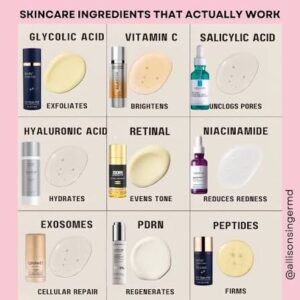
Walking into a skincare store or browsing skincare products online can feel overwhelming. You may see ingredients such as Niacinamide, Hyaluronic Acid, Vitamin C, Salicylic Acid, Ceramides, and Retinoids everywhere. But what do these ingredients actually do, and which ones are suitable for your skincare routine?
Understanding skincare ingredients can make it easier to choose products based on your skin’s needs instead of simply buying products because they are trending.
The important thing to remember is that no single ingredient is perfect for everyone. Different ingredients have different purposes, and the right choice depends on your skin type, concerns, existing routine, and how your skin responds.
In this guide, we will explain some of the most popular skincare ingredients, what they are commonly used for, and how beginners can approach them.
Why Should You Understand Skincare Ingredients
The skincare industry offers thousands of products, but attractive packaging and marketing claims do not tell you everything about a product.
Understanding ingredients can help you:
- Make more informed skincare choices
- Understand what a product is designed to do
- Avoid unnecessary products
- Build a simpler skincare routine
- Identify ingredients that may not suit your skin
- Understand the difference between hydration, exfoliation, and other skincare functions
You do not need to become a skincare expert. Knowing the basics of a few commonly used ingredients can already make shopping much easier.
1. Niacinamide
Niacinamide is a form of vitamin B3 and is one of the most commonly used ingredients in modern skincare.
It is found in a wide variety of products, including serums, moisturizers, cleansers, and other formulations.
What Is Niacinamide Used For?
Niacinamide is commonly used in skincare products designed to:
- Support the skin barrier
- Improve the appearance of uneven-looking skin
- Help manage excess oil
- Improve the appearance of pores
- Support smoother-looking skin
It is popular because it can be included in routines for several different skin types.
Who May Consider Niacinamide?
People with oily, combination, or uneven-looking skin may be interested in niacinamide-based products. However, suitability depends on the overall formulation and individual skin response.
If you are new to active ingredients, introduce a niacinamide product gradually.
2. Hyaluronic Acid
Despite the word “acid” in its name, hyaluronic acid is primarily known in skincare for its hydrating properties.
It is a humectant, meaning it helps attract and retain water.
What Does Hyaluronic Acid Do?
Hyaluronic acid is commonly used in skincare products designed to:
- Provide hydration
- Reduce the feeling of dryness
- Make skin feel softer and more comfortable
- Support a plump, hydrated appearance
It is often found in serums, moisturizers, and hydrating masks.
Is It Suitable for Dry Skin?
Hyaluronic acid can be useful in a hydration-focused routine, including for people with dry skin. However, the overall formulation and moisturizer used afterward also matter.
If your skin feels dry, combining a hydrating product with a suitable moisturizer can help create a more complete routine.
3. Vitamin C
Vitamin C is an antioxidant that has become extremely popular in skincare.
It is commonly found in serums and other products designed to support brighter and more even-looking skin.
What Is Vitamin C Used For?
Vitamin C is commonly used to:
- Support brighter-looking skin
- Improve the appearance of uneven skin tone
- Provide antioxidant support
- Complement a sun-protection routine
Vitamin C products can vary considerably in formulation and stability, so following the product’s storage and usage instructions is important.
How Should Beginners Use Vitamin C?
If you are new to vitamin C, start with a product formulated for beginners and follow its directions.
Do not assume that a stronger concentration will automatically provide better results. If your skin becomes irritated, reconsider the product and routine.
And remember: vitamin C does not replace sunscreen. A daytime skincare routine should still include appropriate sun protection.
4. Salicylic Acid
Salicylic acid is a beta hydroxy acid, commonly known as BHA.
It is frequently used in skincare products designed for oily and acne-prone skin.
What Does Salicylic Acid Do?
Salicylic acid can help exfoliate the skin and is particularly known for its ability to work within pores.
It is commonly used in products designed to:
- Manage excess oil
- Help keep pores clear
- Improve the appearance of blemishes
- Remove dead skin cells
It can be found in cleansers, serums, toners, and spot-treatment products.
Can Everyone Use Salicylic Acid?
Not necessarily.
People with sensitive or dry skin may find exfoliating acids irritating, particularly when used too frequently.
If you are introducing salicylic acid into your routine, start gradually and follow the product instructions.
Avoid combining multiple strong exfoliating products without understanding how they work together.
5. Ceramides
Ceramides are lipids naturally found in the skin and are important components of the skin barrier.
They are commonly used in moisturizers and other barrier-supporting skincare products.
Why Are Ceramides Important?
The skin barrier helps protect the skin and maintain moisture.
Ceramide-containing products are commonly used to:
- Support the skin barrier
- Reduce the feeling of dryness
- Improve skin comfort
- Support moisture retention
They can be especially useful in routines focused on maintaining or supporting the skin barrier.
If your skin often feels dry, tight, or uncomfortable, a moisturizer containing barrier-supporting ingredients such as ceramides may be worth considering.
6. Retinoids
Retinoids are vitamin A derivatives used in skincare for several purposes.
They are commonly discussed in relation to:
- Skin texture
- Fine lines
- Uneven-looking skin
- Acne management
- Overall skin renewal
Retinoids include different types and strengths, and some forms are available only through a healthcare professional depending on the country and product.
Should Beginners Use Retinoids?
Beginners should approach retinoids carefully.
Start with a suitable product and follow its instructions. Introducing it gradually may help your skin adjust.
Retinoids can cause dryness or irritation, particularly when someone begins using them too frequently.
Because retinoids can increase sensitivity to sunlight, daytime sun protection is particularly important.
If you are unsure whether a retinoid is suitable for you, consider speaking with a dermatologist or other qualified healthcare professional.
7. Alpha Hydroxy Acids (AHAs)
Alpha hydroxy acids, or AHAs, are chemical exfoliating ingredients.
Common examples include glycolic acid and lactic acid.
They are often used in products designed to improve the appearance and feel of the skin by helping remove dead skin cells from the surface.
What Are AHAs Used For?
AHAs may be used to:
- Improve the appearance of skin texture
- Reduce the appearance of dullness
- Smooth the skin’s surface
- Support a more even-looking complexion
However, excessive exfoliation can irritate the skin.
If you are new to AHAs, introduce them carefully and follow the product’s recommended frequency.
8. Peptides
Peptides are short chains of amino acids and are used in a variety of skincare formulations.
They are often included in products focused on supporting the appearance and feel of mature or stressed skin.
Peptides are commonly found in:
- Serums
- Moisturizers
- Eye creams
- Anti-aging skincare products
Different peptide formulations can have different purposes, so it is useful to check the specific product description and ingredient list.
9. Aloe Vera
Aloe vera is a plant-derived ingredient commonly found in soothing and hydrating skincare products.
It is often used in products designed to provide a cooling or moisturizing feel.
Aloe vera can be found in:
- Gels
- Moisturizers
- Masks
- After-sun products
Although many people find aloe-based products comfortable, individual reactions can vary. Always pay attention to how your skin responds.
How to Choose the Right Skincare Ingredient
Knowing what an ingredient does is only the first step. You also need to consider whether it makes sense for your routine.
Start by identifying your primary skincare goal.
If Your Main Goal Is Hydration
Look for ingredients such as:
- Hyaluronic acid
- Glycerin
- Ceramides
If You Want to Support the Skin Barrier
Consider products containing:
- Ceramides
- Niacinamide
- Other moisturizing and barrier-supporting ingredients
If You Are Concerned About Excess Oil or Clogged Pores
Ingredients commonly used in these types of products include:
- Salicylic acid
- Niacinamide
If You Want Brighter-Looking Skin
Ingredients commonly found in brightening-focused products include:
- Vitamin C
- Niacinamide
- AHAs
The right choice depends on your individual skin and the complete formulation of the product.
Don’t Mix Everything at Once
One of the biggest mistakes beginners make is trying multiple active ingredients simultaneously.
For example, starting several new acids, a retinoid, vitamin C, and multiple serums at the same time can make your routine difficult to manage.
Instead:
Start with the basics → Introduce one active at a time → Follow product instructions → Observe your skin’s response.
This approach makes it easier to understand which products suit you.
Read the Full Ingredient List
The ingredient highlighted on the front of the package is not the only ingredient that matters.
Before buying a skincare product, check:
- Full ingredient list
- Product purpose
- Directions for use
- Warnings
- Expiry information
- Storage instructions
Two products containing the same headline ingredient can still perform differently because their overall formulations are different.
Skincare Ingredients and Your Skin Type
Your skin type can also influence which products feel most comfortable.
Oily Skin
Lightweight formulations and products containing ingredients such as niacinamide or salicylic acid may be commonly considered.
Dry Skin
Hydrating and barrier-supporting ingredients such as hyaluronic acid and ceramides may be useful.
Combination Skin
A balanced routine may be appropriate, with different textures depending on the areas of your face.
Sensitive Skin
A simple routine with gentle products may be preferable. Introduce active ingredients cautiously.
Normal Skin
Focus on maintaining a consistent routine with cleansing, moisturizing, and sun protection.
Final Thoughts
Understanding skincare ingredients does not need to be complicated.
Ingredients such as niacinamide, hyaluronic acid, vitamin C, salicylic acid, ceramides, retinoids, AHAs, and peptides each have different roles in skincare.
The most important thing is to choose products based on your skin type and individual needs instead of simply following trends.
Start with a basic routine of cleanser, moisturizer, and sunscreen. Once your skin is comfortable with the basics, introduce targeted products gradually.
Remember that stronger products are not automatically better, and more ingredients do not necessarily mean better results. Consistency, appropriate product selection, and careful use are much more important.
If you have persistent acne, severe irritation, or another ongoing skin concern, consult a qualified dermatologist for personalized advice.
Good skincare is not about using everything. It is about understanding what your skin needs and choosing products thoughtfully.