How to Build an Affordable Skincare Routine
Skincare has become an important part of everyday self-care. With countless cleansers, serums, moisturizers, masks, oils, and other beauty products available, it is easy to believe that you need a large collection of products to take good care of your skin.
But the truth is much simpler: a good skincare routine does not have to be expensive or complicated.
You do not need to buy every trending product you see on social media. You also do not need multiple serums for every possible skincare concern. The key is understanding your skin, identifying what you actually need, and choosing products carefully.
An affordable skincare routine can be effective when it focuses on the basics and avoids unnecessary purchases.
In this guide, we will explain how to create a simple and budget-friendly skincare routine, which products are essential, what you can skip, and how to avoid overbuying.
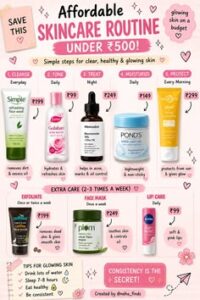
What Does an Affordable Skincare Routine Mean?
An affordable skincare routine is not necessarily about choosing the cheapest products available.
Instead, it means spending your money thoughtfully on products that you actually need and are likely to use consistently.
A simple routine can include:
- Cleanser
- Moisturizer
- Sunscreen
Depending on your skin type and specific concerns, you may later add a serum or treatment product.
The goal is to build a routine that fits both your skin needs and your budget.
Why Do People Overbuy Skincare Products?
There are several reasons people end up buying more skincare products than they actually need.
Social Media Trends
Skincare trends can spread quickly on platforms such as Instagram, YouTube, and TikTok. A product becomes popular, thousands of people recommend it, and suddenly it feels like something everyone needs.
However, popularity does not mean that a product is suitable for every skin type.
Attractive Marketing
Skincare brands often use attractive packaging, influencer marketing, and claims about specific ingredients to attract customers.
Marketing can be useful for discovering products, but it should not be the only factor you consider before purchasing.
Fear of Missing Out
Limited-time offers, discounts, bundles, and new launches can encourage people to buy products they were not originally planning to purchase.
Before buying, ask yourself:
“Do I actually need this product?”
If the answer is no, you may be better off saving your money.
Start With the Essential Skincare Products
Before purchasing optional skincare products, focus on the basics.
1. Cleanser
A cleanser helps remove sweat, excess oil, dirt, makeup, and other impurities.
Choose a cleanser that suits your skin type and feels comfortable after use.
You do not need an expensive cleanser simply because it contains many ingredients. Its main purpose is to cleanse the skin effectively without unnecessary irritation.
2. Moisturizer
Moisturizer helps keep the skin comfortable and supports the skin barrier.
Different skin types may prefer different textures.
For example, people with oily skin may prefer lightweight lotions or gel textures, while people with dry skin may prefer richer creams.
Choose a moisturizer that you are comfortable using consistently.
3. Sunscreen
Sunscreen is an important part of daytime skincare.
Sun exposure can contribute to premature skin aging and other forms of skin damage. A broad-spectrum sunscreen can help protect exposed skin from ultraviolet radiation.
Instead of buying several different sunscreens, start with one that provides suitable protection and that you will use consistently.
What Products Are Optional?
Once you have the basics, you may consider adding additional products.
These can include:
- Serums
- Exfoliators
- Face masks
- Toners
- Facial oils
- Eye creams
- Treatments
However, none of these automatically needs to be part of everyone’s routine.
Your decision should depend on your skin type, specific concerns, preferences, and budget.
For example, if your primary goal is hydration, you might consider a hydrating serum. If you do not have a specific reason for adding a product, you may not need it.
Understand Your Skin Type Before Shopping
One of the easiest ways to waste money on skincare is buying products without understanding your skin.
The main skin types are:
Oily Skin
Oily skin tends to produce more sebum and may appear shiny.
Lightweight skincare products may feel more comfortable.
Dry Skin
Dry skin can feel tight, rough, or uncomfortable.
Moisturizing and barrier-supporting products may be useful.
Combination Skin
Combination skin can have both oily and dry areas.
A balanced routine can help address different needs without using unnecessarily strong products.
Normal Skin
Normal skin generally feels relatively balanced.
A simple cleanser, moisturizer, and sunscreen routine may be enough for everyday care.
Sensitive Skin
Sensitive skin may react easily to certain products.
A simple routine with gentle products may be preferable, and new products should be introduced carefully.
Choose Ingredients Based on Your Needs
You do not need to buy products containing every popular ingredient.
Instead, identify your main skincare goal.
For Hydration
Commonly used hydrating ingredients include:
- Hyaluronic acid
- Glycerin
- Ceramides
For Supporting the Skin Barrier
Ingredients commonly used in barrier-focused products include:
- Ceramides
- Niacinamide
- Moisturizing ingredients
For Oily or Blemish-Prone Skin
Ingredients commonly used in these types of products include:
- Salicylic acid
- Niacinamide
For Brighter-Looking Skin
Some commonly used ingredients include:
- Vitamin C
- Niacinamide
- Alpha hydroxy acids
Remember that the full product formulation matters, not just one ingredient listed on the front of the package.
Do Not Buy Multiple Products With the Same Purpose
Another way to save money is to avoid buying several products that perform essentially the same role.
For example, you may not need:
- Three different cleansers
- Four moisturizers
- Multiple hydrating serums
- Several face masks
Having different products can be enjoyable, but if your goal is an affordable skincare routine, prioritize products that serve a clear purpose.
Before purchasing something new, check your existing collection.
Ask:
“Do I already have a product that does this?”
If yes, finish the existing product before buying another unless there is a specific reason to change.
Follow a Simple Morning Routine
Your morning routine does not need to contain many steps.
Step 1: Cleanser
Cleanse your face using a suitable cleanser.
Step 2: Moisturizer
Apply moisturizer according to your skin’s needs.
Step 3: Sunscreen
Apply broad-spectrum sunscreen as the final step of your morning skincare routine.
If you use a serum or another treatment, you can add it before moisturizer according to the product’s instructions.
A simple routine is easier to maintain and can help you avoid unnecessary spending.
Follow a Simple Night Routine
Your nighttime routine can also remain simple.
Step 1: Remove Makeup or Sunscreen
If necessary, use an appropriate method to remove makeup and sunscreen.
Step 2: Cleanser
Cleanse your face gently.
Step 3: Treatment or Serum
If you have a specific skincare concern and are using a suitable treatment product, apply it according to the instructions.
Step 4: Moisturizer
Finish with a suitable moisturizer.
You do not need to use a separate product for every part of your face.
Create a Skincare Budget
One practical way to avoid overbuying is to set a monthly or quarterly skincare budget.
For example, instead of purchasing products whenever something catches your attention, decide how much you are comfortable spending.
You can divide your budget between:
- Essential products
- Replacement products
- Optional products
Essentials should come first.
If your cleanser is almost finished, replacing it should generally be a higher priority than purchasing another trending serum.
Make a Shopping List Before Buying
Impulse shopping can quickly increase your skincare expenses.
Before visiting a store or shopping online, make a list.
For example:
Current needs:
- Cleanser — nearly finished
- Moisturizer — available
- Sunscreen — nearly finished
- Serum — not required
This simple approach can help you distinguish between products you need and products you simply want to try.
Use Products Consistently
Buying a new product every few weeks can become expensive.
Instead, give yourself time to use the products you already own.
Consistency can also make your routine easier to evaluate.
If you constantly switch between different products, you may find it difficult to understand what suits your skin.
When introducing a new product, add it gradually rather than replacing your entire routine at once.
Be Careful With Skincare Discounts
Discounts can be useful, but they can also encourage unnecessary purchases.
A product being 30%, 40%, or 50% off does not make it a good purchase if you do not need it.
Before purchasing a discounted skincare product, ask:
- Do I need it?
- Does it suit my skin type?
- Do I already own something similar?
- Will I actually use it?
- Is it still within its recommended shelf life?
A discount only saves money when you were going to buy the product anyway.
Avoid Buying Products Only Because They Are Viral
Social media can be a great place to learn about skincare, but viral products should not automatically become part of your routine.
A product may work well for one person but not for another.
Before buying a trending product, research:
- Its ingredients
- Intended purpose
- Suitable skin types
- Usage instructions
- Potential irritants
- Whether it fits your existing routine
This can help you make a more informed decision.
Check the Ingredient List
When shopping for skincare products, look beyond the front of the package.
Read the ingredient list and understand the main purpose of the product.
For example, if you already own a hydrating serum, buying another serum with a very similar purpose may not be necessary.
You can also compare different products based on their ingredients, size, formulation, and intended use rather than choosing based only on packaging.
Don’t Chase Stronger Products
Another common reason people overspend is the belief that stronger products provide better results.
This is not necessarily true.
Some active ingredients can cause irritation when used incorrectly or too frequently.
Instead of choosing the strongest available formula, choose a product that is appropriate for your experience level and skincare needs.
If you are introducing an active ingredient, follow the product’s instructions and add it gradually.
Affordable Does Not Mean Low Quality
There is a common misconception that affordable skincare products cannot be good.
Price alone does not determine whether a product is suitable for your skin.
An affordable product with a well-designed formulation can be useful, while an expensive product may not be suitable for everyone.
When comparing products, consider:
- Ingredients
- Formulation
- Product purpose
- Your skin type
- Brand information
- User instructions
- Value for the amount provided
Choose based on suitability rather than price alone.
A Sample Minimal Skincare Routine
Here is an example of a simple routine for someone who wants to avoid overbuying.
Morning
Gentle Cleanser
↓
Moisturizer
↓
Broad-Spectrum Sunscreen
Night
Cleanser
↓
Optional Treatment/Serum
↓
Moisturizer
That’s it.
You can add other products only when there is a clear reason.
When Should You Add a New Product?
Before adding a new skincare product, ask yourself five questions:
1. What problem am I trying to address?
Know your goal before purchasing.
2. Do I already have a product for this?
Check your existing skincare collection.
3. Is this product suitable for my skin type?
Do not purchase something simply because it is popular.
4. Can I use it with my current routine?
Some active ingredients may not be appropriate to combine without careful consideration.
5. Is it within my budget?
If buying the product means spending money you need for essentials, wait.
These questions can prevent unnecessary purchases.
Final Thoughts
Building an affordable skincare routine is not about buying the cheapest products or avoiding skincare altogether. It is about spending intentionally and choosing products that genuinely fit your needs.
Start with the essentials: cleanser, moisturizer, and sunscreen. Once you understand your skin and have a consistent basic routine, you can consider adding targeted products such as serums or treatments.
Avoid buying products simply because they are trending, heavily discounted, or recommended by someone with a completely different skin type.
Remember that a bigger skincare collection does not automatically mean better skincare. A small collection of suitable products that you use consistently can be much easier to manage.
Before every purchase, ask yourself one simple question:
“Do I really need this product?”
If you can answer that question honestly, you are already on your way to creating a smarter, simpler, and more affordable skincare routine.
Good skincare is not about having more products. It is about choosing the right products and using them consistently.